


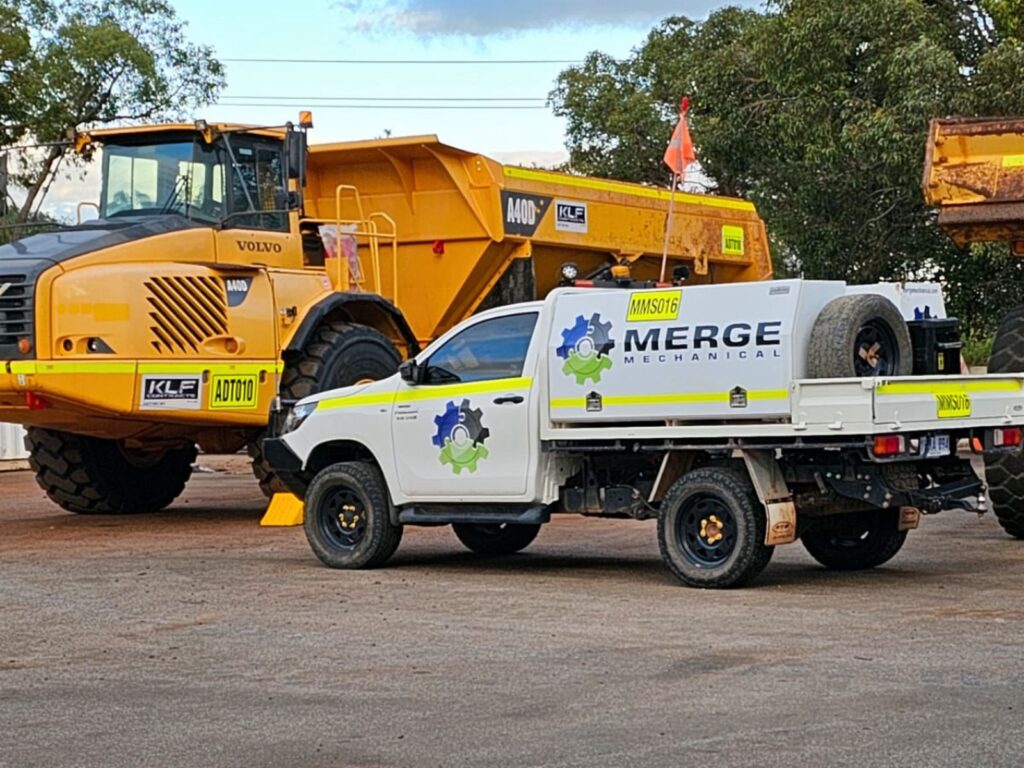
If a work vehicle or piece of equipment breaks down near Roe Highway, the first concern is safety, followed by getting the right help to the right location. A callout is easier to coordinate when you can clearly explain where you are, what has stopped working and whether the vehicle or machine is in a safe place. Merge Mechanical Services provides 24/7 emergency breakdown support across Perth and regional Western Australia.
Whether the job involves a truck operating between Welshpool and Kewdale, or equipment working near the Hazelmere industrial area, the details you provide when you ring help the team understand what support may be needed. An exact arrival time or on-site repair cannot be guaranteed before the location, fault and availability have been assessed.
24/7 Breakdown Callouts on Roe Highway: What Happens First?
When you contact a breakdown service, be ready to share the essential details. This helps establish the urgency of the situation and whether mobile mechanical support, an auto electrician, hydraulic assistance or another response may be appropriate.
- Your exact location: Give the direction of travel, nearest exit, intersection, landmark or safe access point. If you are at a worksite, provide the site name and entry instructions.
- Vehicle or equipment details: Explain whether it is a truck, heavy vehicle, plant or other equipment. Share the make and model if known.
- What happened: Describe the symptoms, warning lights, unusual noises, loss of power, fluid leak or other fault. Say whether the machine has stopped completely or can still move safely.
- Safety and access: Explain whether the vehicle is obstructing traffic, whether there are hazards nearby and whether a technician can safely access the equipment.
- Work already attempted: Mention any checks or previous repairs, without attempting unsafe repairs yourself.
Do not stand in a live traffic lane or try to inspect machinery in an unsafe location just to collect more information. Safety comes first.
What Happens After You Ring for a Roe Highway Breakdown?
1. The Situation Is Assessed
The initial information helps clarify the type of fault, the location and how urgently it needs attention. Be specific if the breakdown affects braking, steering, engine temperature, oil pressure, visibility or another safety-critical system.
For a truck or piece of plant, mention any relevant fault codes or dashboard messages if they are already available. Do not keep operating equipment that may be unsafe simply to gather more details.
2. The Appropriate Support Is Considered
Different breakdowns call for different skills. A fault may require a heavy diesel mechanic, an auto electrician, on-site diagnostics or mobile hydraulic hose repair. Merge Mechanical’s field division provides these types of support, including diagnostics for equipment such as Caterpillar, Komatsu and Hitachi.
The details of the fault, equipment and location help determine what response is suitable. Not every issue can be confirmed over the phone, and some faults need further investigation once the technician reaches a safe working location.
3. Access and Dispatch Details Are Confirmed
Clear directions and access information can help avoid delays finding the vehicle or machine. Around the Roe Highway corridor, give the nearest safe access point rather than relying on a vague description such as “near the highway”. For an industrial site in Welshpool, Kewdale or Hazelmere, explain the site entrance, work area and any access requirements.
Dispatch arrangements and arrival times depend on the location, the nature of the breakdown, technician availability and conditions at the time. Ask the person handling the call for the current expectation instead of assuming a fixed response time.
4. The Fault Is Assessed On Site
Once the work area is safe, the technician can assess the reported issue and determine what checks or repairs are appropriate. Depending on the equipment and fault, this may involve mechanical inspection, electrical testing, diagnostic equipment or checking a hydraulic system.
The original symptom does not always identify the failed component. Proper assessment helps avoid replacing parts based on guesswork.
5. The Next Step Is Explained
Some faults can be repaired at the location if the necessary parts, tools and safe working conditions are available. Other jobs may require additional parts, a more extensive repair, specialist facilities or recovery to another location.
Ask what has been found, what work is proposed and whether the scope or cost changes after diagnosis. The technician or service provider should explain the next step so you can make an informed decision about proceeding.
What If the Breakdown Happens in Traffic?
If a vehicle breaks down on Roe Highway or another major road, arrange safety before mechanical repairs. If you can safely exit the road, do so. If you cannot, follow Main Roads WA guidance: keep your hazard lights on, remain in the vehicle with your seatbelt fastened and call Main Roads on 138 138 for advice. Call 000 if there is immediate danger or someone is seriously injured.
Main Roads and authorised incident-response teams manage safety and vehicle recovery on the state road network. Do not attempt a repair beside fast-moving traffic or invite a technician to work in a hazardous lane. Wait for the road operator or emergency personnel to make the location safe.
Read the official Main Roads WA advice for breakdowns on major roads and freeways for current guidance.
How to Help the Callout Run Smoothly Around Welshpool and Kewdale
If your vehicle is at an industrial site near Welshpool or Kewdale, prepare the site and equipment details while remaining in a safe location. Identify the machine, explain the work it was doing when the fault occurred and tell the service provider about any access restrictions or hazards.
For heavy equipment, useful details may include the make, model, displayed fault message and whether the issue relates to the engine, electrical system or hydraulics. Only provide information you can obtain safely. Do not remove covers, disconnect components or attempt to work on pressurised hydraulic equipment unless you are qualified and the system has been made safe.
These details can help the service provider consider the right tools and skills for the job, although the actual cause may only become clear after an on-site assessment.
Request 24/7 Breakdown Support for Roe Highway and Perth
Merge Mechanical Services provides 24/7 emergency breakdown support through its field division, with heavy diesel mechanics, auto electricians, mobile hydraulic hose repair and on-site diagnostics for relevant vehicles and equipment. Support is available across Perth and regional Western Australia, including industrial and worksite environments.
For assistance, visit the emergency breakdown service in Perth and WA and provide your location, equipment details and the symptoms you have observed.
Final Thoughts
When you ring after a breakdown on Roe Highway, clear information helps the service provider assess the situation, consider the right support and coordinate access to the vehicle or equipment. Be ready to describe the location, vehicle or machine, symptoms and any safety concerns.
Arrival times and on-site repairs depend on the circumstances, so confirm the current arrangements when you call. If the breakdown is on a live road, prioritise traffic safety and follow Main Roads or emergency-service instructions before attempting any mechanical work.
Contact Merge Mechanical
MERGE MECHANICAL PTY LTD
Workshop: 4 Lakewood Cove, Kenwick WA 6107
Phone: 1300 063 743

