



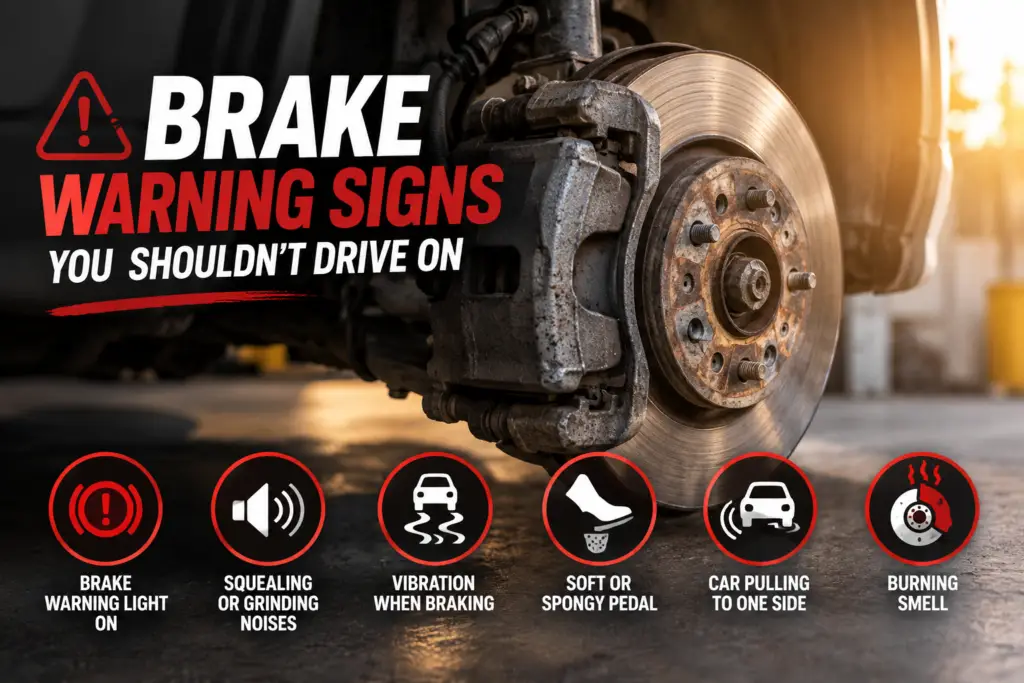
Brake problems should never be ignored. If your vehicle is making a grinding noise, the brake pedal feels different, or a warning light stays on, continuing to drive could put you and others at risk. For drivers around Kenwick, recognising the difference between a symptom that needs prompt inspection and a fault that means you should stop driving can help prevent a dangerous situation.
If braking feels weak, the pedal sinks toward the floor, fluid is leaking, or you hear severe grinding, pull over somewhere safe as soon as you can and do not continue driving. Arrange professional roadside assistance or towing. Do not try to reach the workshop by driving a vehicle that may not stop reliably.
Brake warning signs that mean you should stop driving
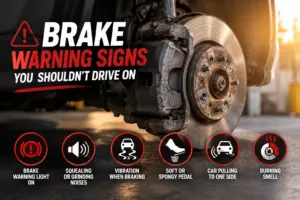
1. The brake pedal feels soft, spongy or sinks
A pedal that suddenly feels soft, travels much farther than usual or slowly sinks under steady pressure can indicate a serious hydraulic fault, air in the system or another braking problem. If the pedal goes close to the floor or braking performance has changed, stop in a safe place and arrange a tow. Do not pump the pedal and assume the vehicle is safe to drive.
2. A red brake warning light stays on
First make sure the parking brake is fully released, following the vehicle handbook. If the red brake warning light remains on, especially alongside a changed pedal feel, reduced braking or a low-fluid warning, stop safely and seek assistance. Brake fluid can be low because of a leak or component wear, so do not simply top it up and continue without checking the cause.
3. Grinding or scraping when you brake
A harsh metal-on-metal grinding sound can mean brake pads are worn down or another component is damaged. Further driving can reduce braking performance and cause additional damage. If you hear pronounced grinding, feel reduced braking or notice the vehicle is not stopping normally, stop safely and arrange professional assistance rather than driving to a mechanic.
4. Brake fluid is leaking
Look for an unexplained wet patch near a wheel or under the vehicle, but do not crawl under an unsupported car to investigate. Brake fluid leaks can reduce hydraulic pressure and make braking unreliable. If you suspect a brake-fluid leak, do not drive the vehicle; arrange a tow or suitable roadside assistance.
5. The car takes longer to stop or pulls sharply to one side
If the vehicle suddenly needs more distance to stop, the brakes feel weak, or it pulls strongly to one side during braking, treat the change as a safety issue. Possible causes include brake component faults, hydraulic issues, tyre problems or other steering and suspension concerns. Stop driving if control or stopping performance is affected and have the vehicle assessed.
6. Smoke, a burning smell or extreme heat near a wheel
A strong burning smell, visible smoke or unusual heat near a wheel may indicate an overheated or binding brake. Stop in a safe location, switch off the vehicle and keep clear of smoke or hot components. Do not touch the wheel or attempt to cool the brakes with water. If there is smoke or a fire risk, move away and contact emergency services as appropriate; arrange professional help before the vehicle is moved again.
Other brake symptoms you should get checked promptly
Squealing, vibration through the pedal or steering wheel, a pulsing pedal, or a new change in brake feel can point to worn or uneven components, rotor problems or another fault. These symptoms do not all have the same cause, but they should not be ignored. If vibration is severe, the vehicle pulls, the pedal changes, or braking ability is reduced, do not continue driving. If braking still feels normal and the symptom is mild, arrange an inspection as soon as practical and follow the vehicle handbook’s advice.
What to do if a brake problem starts while driving
- Keep calm and focus on controlling the vehicle. Avoid sudden manoeuvres where possible.
- Signal and move to a safe stopping place if the vehicle can be controlled safely.
- Use the braking method described in your vehicle handbook; do not rely on improvised techniques.
- Once stopped, do not continue the journey if the brakes feel unsafe or any of the serious warning signs above are present.
- Arrange roadside assistance or towing and tell the repairer exactly what you noticed, including lights, sounds, smells and changes in pedal feel.
Never test faulty brakes in traffic or assume that the vehicle is safe because the warning temporarily disappears.
Brake inspections for Kenwick, Welshpool and Maddington drivers
If you notice a change in your brakes around Kenwick, Welshpool, Maddington, Cannington or Beckenham, arrange a professional inspection. Brake checks may involve examining pads and discs, hydraulic components, fluid condition, hoses and other parts appropriate to your vehicle. The repair required depends on the diagnosis, so ask the workshop to explain the findings and any recommended work before authorising repairs.
Merge Mechanical Services operates from 4 Lakewood Cove, Kenwick WA 6107. Find out more about automotive repairs and servicing at Merge Mechanical Services, or call 1300 063 743 to discuss the next safe step. If the brakes may not function properly, do not drive the vehicle to the workshop.
MERGE MECHANICAL PTY LTD
Workshop: 4 Lakewood Cove, Kenwick WA 6107
Phone: 1300 063 743

