





Planning a long Western Australia road trip in your 4WD? Before leaving Kenwick, book time to check the vehicle and prepare for the conditions along your route. Long distances, gravel roads, heavy loads, heat and stretches with limited services can turn a small existing fault into a much bigger disruption. A pre-trip service cannot prevent every breakdown, but it can help identify wear and maintenance needs before you head away from home.
Book early enough to allow time for any repairs the inspection finds. Avoid leaving important servicing until the day before departure, when parts or extra work could disrupt your plans.
1. Book a 4WD inspection and review the service schedule
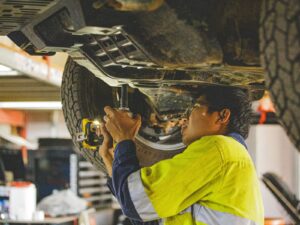
Check your logbook or digital service history and tell the workshop how far you plan to travel, whether you’ll tow or carry camping gear, and whether your route includes unsealed or remote roads. A suitable inspection may include the engine, cooling system, brakes, steering, suspension, tyres, battery, lights and visible leaks. The exact work depends on your vehicle and its maintenance schedule.
Mention any warning lights, hard starts, unusual noises, overheating, leaks or changes in handling before the inspection. A pre-trip check is not a replacement for diagnosing symptoms that are already present.
2. Check tyres, the spare and wheel-changing gear
- Look for cuts, cracks, bulges, embedded objects and uneven tread wear on all tyres.
- Check pressures when the tyres are cold, following the vehicle maker’s guidance and allowing for the load.
- Check the spare tyre’s condition and pressure; make sure it is suitable for the vehicle and journey.
- Confirm the jack, wheel brace and any wheel-lock key are present and in working order.
- For remote or rough routes, consider whether your spare tyres, inflator and repair equipment suit the terrain.
Do not rely on visibly damaged or badly worn tyres. Ask a tyre professional if you are unsure whether they are safe for the journey.
3. Inspect the cooling system before WA heat
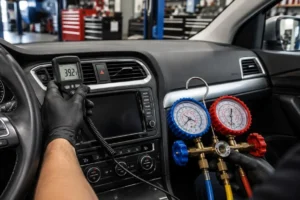
Long drives, towing and slow travel on rough terrain can place extra demand on the cooling system. Ask a mechanic to check the radiator and accessible cooling components, hoses, clamps, coolant condition and signs of leaks or corrosion. Belts and cooling fans may also need inspection, depending on the vehicle.
Use only coolant that meets the manufacturer’s specification. Never open a hot radiator or pressurised coolant cap. If an overheating warning appears during the trip, stop somewhere safe as soon as possible, switch off the engine and follow the owner’s manual; continuing to drive an overheating engine can cause major damage.
4. Check the battery, lights and electrical accessories
Have the battery and charging system tested if the engine cranks slowly, the battery is older or you use accessories such as a fridge, extra lights or communications equipment. If your 4WD has an auxiliary battery, check that it is working correctly and suitable for the planned load. Test headlights, brake lights, indicators and other required lights. Jumper leads or a power pack may be useful, provided they are suitable for your vehicle and you know how to use them safely.
5. Check brakes, steering, suspension and wheel bearings
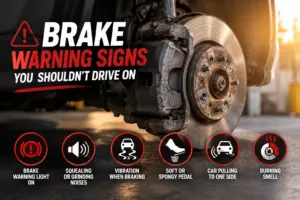
A loaded 4WD or vehicle towing a trailer places different demands on brakes, tyres and suspension. Have unusual squealing or grinding, vibration, pulling to one side, steering play, suspension knocks or wheel-bearing noises assessed before departure. A mechanic can inspect brake pads and discs, relevant hydraulic components, steering and suspension parts as appropriate.
If braking performance is reduced, the brake pedal feels abnormal, a serious leak is present or the vehicle does not steer or handle safely, do not continue driving. Arrange professional assistance before the trip.
6. Review fluids, filters, belts and the 4WD drivetrain
Confirm that engine oil and other relevant fluids are at the correct levels and that scheduled maintenance is up to date. Depending on the maker’s service plan, that may include transmission, transfer case and differential oils, fuel or air filters and other scheduled items. Ask the workshop to check for visible leaks around accessible components.
If you expect to use four-wheel drive or low range, make sure you understand how the system works and follow the owner’s manual. Ask a mechanic to investigate warning lights, unusual drivetrain noises, vibration or difficulty engaging the system before departure.
7. Pack for distance and limited services
Prepare for delays as well as the planned drive. Depending on your route, consider carrying enough drinking water and food for unexpected delays, first-aid supplies, a torch, a suitable tool kit, tyre inflator and gauge, basic vehicle-specific spares and recovery equipment suited to your terrain. Carry charged phones and offline maps; where mobile coverage may be absent, consider an appropriate satellite communicator or emergency beacon. Make sure you know how to use any recovery gear you carry.
Plan fuel stops before entering long stretches with limited services, secure all luggage, and stay within the vehicle, tyre, roof-rack and towing load ratings. Extra weight affects handling and stopping distance. If towing, check the trailer’s tyres, coupling, safety chains and lights as well.
8. Check road conditions and share your travel plan
Review the weather and road conditions along your route, including road closures, roadworks, fire or flood warnings and access requirements. Main Roads WA provides a long-distance driving guide and Travel Map information to help plan around conditions and closures. Recheck official updates close to departure and during the trip because conditions can change.
For remote travel, tell someone your itinerary and expected arrival times, and agree how you’ll check in. Plan fuel and rest stops instead of assuming services will be available. Take regular breaks and adjust your plans if weather or road conditions make the journey unsafe.
4WD servicing in Kenwick before a long WA trip
The right pre-trip checklist depends on your 4WD, its load and the route you plan to drive. Drivers from Welshpool, Maddington, Cannington and Beckenham can discuss their plans with a workshop in Kenwick, including whether the trip involves sealed highways, gravel roads, towing or remote travel.
Merge Mechanical Services is based at 4 Lakewood Cove, Kenwick WA 6107. Learn more about automotive repairs and servicing at Merge Mechanical Services, or call 1300 063 743 to discuss your 4WD’s maintenance needs before you depart.
MERGE MECHANICAL PTY LTD
Workshop: 4 Lakewood Cove, Kenwick WA 6107
Phone: 1300 063 743

