




For crews working around Maddington, a few minutes spent on pre-start checks can help identify defects before machinery is put to work. Whether equipment is operating near Kenwick, Welshpool, Canning Vale or Kewdale, checks should follow the manufacturer’s instructions and the site’s safety procedure. They cannot prevent every breakdown, but they can help spot problems early and reduce avoidable downtime.
Pre-start inspections are especially important for excavators, loaders, trucks, tractors and other mobile plant used in industrial, civil and transport work. The goal is to confirm that the machine appears safe to operate, identify anything that needs attention and report defects before they become more serious.
Pre-Start Checks in Maddington That Help Prevent Equipment Breakdowns
Use the checklist required for the specific machine rather than relying on memory alone. The steps below are general prompts, not a replacement for the operator’s manual, site procedure or any inspection checklist supplied by the equipment manufacturer.
1. Walk Around the Machine Before Starting
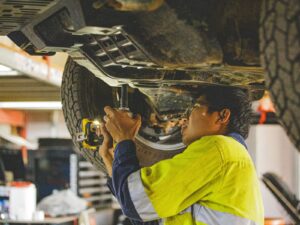
Park in the designated inspection area and follow the machine’s shutdown and isolation instructions. From a safe position, look for visible signs of damage or anything that has changed since the previous shift.
- Look for fresh oil, coolant or fuel leaks underneath or around the machine.
- Check accessible hoses and lines for obvious abrasion, cracks, bulges or damage.
- Look for damaged guards, loose parts, bent steps, damaged handrails or unsecured attachments.
- Check tyres, wheels, tracks and undercarriage components for visible damage or unusual wear.
- Make sure access steps and the operator area are clear of mud, oil, tools and loose objects.
- Look for obstacles, people, soft ground, overhead hazards and other site risks around the machine.
Do not touch a suspected hydraulic leak or use your hand to look for a pinhole spray. High-pressure fluid can penetrate skin. If a significant leak or unsafe defect is found, keep people clear and follow the site’s procedure for taking the machine out of service.
2. Check Fluid Levels and Visible Service Items
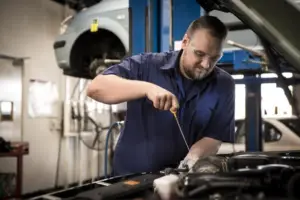
Low or incorrect fluid levels can be associated with equipment problems, but checks must be made using the method specified by the manufacturer. Follow the required shutdown, cooling and isolation procedure, and only access service points that you are trained and authorised to check.
As applicable to the machine, the checklist may cover:
- Engine oil level and any signs of an oil leak.
- Coolant level and visible cooling-system damage, checked only when safe and cool.
- Hydraulic fluid level and visible signs of leakage.
- Fuel level and visible damage or leaks around accessible components.
- Air intake restrictions, filters or other routine service indicators specified by the manual.
Never open a hot radiator or pressurised coolant cap. If a level is outside the specified range or the cause of a loss is unclear, report it and arrange assessment rather than simply topping up and continuing without checking the underlying issue.
3. Inspect Hydraulic Hoses, Fittings and Attachments
Hydraulic hoses can be exposed to abrasion, heat, vibration and repeated movement. Look for obvious external damage, leaks, kinks, crushed sections or loose and damaged supports from a safe position. Check that attachments, pins, couplings and guards appear to be in the required condition according to the machine’s procedure.
Do not loosen fittings, reposition hoses or reach beneath an attachment during a pre-start check. Hydraulic systems can retain stored pressure and attachments can move unexpectedly. Any work that requires access to hydraulic components must follow the manufacturer’s isolation procedure and be performed by competent, authorised personnel.
If a hose appears damaged or there is a hydraulic leak, do not operate the machine until it has been assessed and made safe. A temporary patch is not a substitute for an appropriate repair.
4. Check Tyres, Tracks, Brakes and Steering
For wheeled vehicles, inspect tyres and wheels for visible damage, and check that brakes and steering do not show known defects. For tracked plant, look for obvious track or undercarriage damage and anything caught in a way that could affect movement. Use the relevant machine checklist for detailed inspection points.
After starting, carry out only the prescribed operational checks in the designated safe area. If braking, steering, travel or other machine movement is abnormal, stop and report the defect. Do not take equipment into a work area to see whether the problem clears.
5. Test Warning Lights, Alarms and Safety Devices
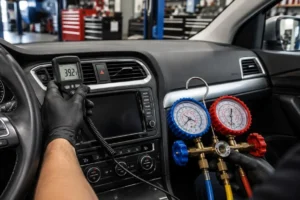
Before operating, check the instruments, displays and safety devices specified by the manufacturer. Depending on the equipment, these may include warning lights, gauges, horn, reversing alarm, lights, mirrors or cameras, seatbelt and other protective systems.
Follow the manual’s procedure for confirming that indicators and alarms work correctly. If a critical warning appears, an alarm or safety device fails, or a control behaves unexpectedly, do not ignore it just because the machine starts. Report the fault and have it assessed before use if safety may be affected.
6. Start Up Carefully and Listen for Changes
Once the visual checks are complete and the area is clear, start the machine in accordance with the operator’s manual. Observe the displays and gauges, and listen for unusual knocking, grinding, whining or other new noises. Watch for smoke, burning smells, overheating or a loss of normal performance.
Operate controls only as directed by the manufacturer, with people clear of moving parts and attachments. Do not reproduce an unsafe condition just to gather more information. If the machine sounds or behaves differently, stop in a safe manner and report what you observed.
7. Record Defects Before Work Starts
A pre-start checklist is useful only if defects are recorded and acted on. Note the machine identifier, date or shift, the item that failed the check and what action was taken. Report the defect to the supervisor or maintenance team according to the site’s process.
If a defect could make the equipment unsafe, isolate or tag it out of service as required by the site procedure. Do not operate the machine until an authorised person confirms that it is safe to return to service. Keep inspection and maintenance records so recurring faults can be identified and investigated.
Pre-Start Checks for Worksites Around Maddington, Kenwick and Welshpool
Industrial and civil sites can have changing ground conditions, vehicle movements, pedestrians, overhead services and restricted access. Alongside the machine check, confirm the planned work area is suitable, traffic and pedestrian controls are in place, communication arrangements are clear and no one is inside the equipment’s operating zone.
For equipment operating between Maddington, Kenwick, Welshpool and Canning Vale, consistent checklists and clear defect reporting can help maintenance teams spot recurring problems. Tailor the inspection to the specific machine, its attachments, operating conditions and manufacturer requirements rather than applying a generic checklist to every item of plant.
Which Problems Need the Machine Taken Out of Service?
Do not use equipment with a defect that may affect safe operation. Examples include significant hydraulic or fuel leaks, damaged hoses, a critical warning, overheating, abnormal braking or steering, unsafe attachment condition, failed safety devices or unpredictable movement.
Stop work, keep people clear and follow the site and manufacturer procedures for shutdown, isolation and reporting. If a person may have been injured by high-pressure hydraulic fluid, seek emergency medical treatment immediately, even if the wound appears small.
Get Equipment Maintenance Support in Maddington and Perth
Merge Mechanical Services supports mining, civil, farming and transport operations across Perth and regional Western Australia. Its field division provides heavy diesel mechanics, auto electricians, on-site diagnostics, scheduled maintenance and breakdown support for relevant equipment. The correct inspection and repair plan depends on the machine, its fault and safe working conditions at the site.
Learn more about mining and equipment maintenance support in WA if your business needs help with heavy equipment maintenance or recurring faults.
Final Thoughts
Pre-start checks cannot eliminate every breakdown, but they can help identify visible damage, leaks, warning messages and unsafe conditions before a machine begins work. Follow the equipment manufacturer’s checklist, record defects, and make sure reported issues receive the right response.
The most important check is the one that leads to action. Never ignore a defect that could make machinery unsafe, and do not return equipment to work until it has been assessed and confirmed safe by an authorised, competent person.
For further guidance, see WorkSafe WA’s mobile plant in construction checklist and Safe Work Australia’s plant and machinery guidance. Always follow the requirements that apply to the actual machine and workplace.
Contact Merge Mechanical
MERGE MECHANICAL PTY LTD
Workshop: 4 Lakewood Cove, Kenwick WA 6107
Phone: 1300 063 743

