


DPF and emissions problems on heavy trucks can reduce power, increase fuel use and bring a vehicle to a halt at the worst time. For operators working in Welshpool and nearby freight and industrial areas such as Kewdale, Hazelmere and Maddington, recognising the warning signs early can help avoid an unplanned breakdown and unnecessary downtime.
A diesel particulate filter (DPF) captures soot from a diesel engine’s exhaust. During regeneration, the exhaust system heats up to burn off accumulated soot. When regeneration cannot complete, or another engine or emissions-system fault is present, warning lights and reduced performance may follow. The cause needs to be diagnosed rather than guessed from the dashboard message alone.
Common DPF and emissions warning signs in Welshpool
- DPF or engine warning lights: A warning that stays on, returns soon after a drive or is accompanied by other fault messages needs attention.
- Reduced engine power or derate: The truck may struggle under load or limit performance to protect the engine and emissions system.
- Frequent or incomplete regeneration: Repeated regeneration requests can point to operating conditions, a sensor problem or another underlying fault.
- Higher fuel consumption: A change in fuel use may occur when regeneration is frequent or the engine is not operating correctly.
- Unusual exhaust behaviour: Excessive smoke, unusual smells or abnormal exhaust temperatures should be checked promptly.
What causes DPF trouble on heavy diesel trucks?
Short runs, extended idling and stop-start work can prevent the exhaust from reaching the conditions needed for a successful regeneration. These patterns can be common around depots, construction sites and busy industrial routes. However, duty cycle is only one possible factor.
Faulty pressure or temperature sensors, wiring issues, exhaust leaks, EGR faults, injector problems or turbocharger issues can also contribute to emissions faults or excessive soot production. A DPF can accumulate non-combustible ash over time as well. Regeneration burns soot, but it does not remove ash, so a filter may eventually require specialist cleaning or replacement according to the manufacturer’s procedure.
Why fault-code diagnosis matters
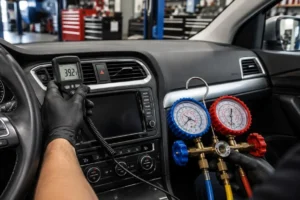
A warning light alone does not confirm that the DPF itself has failed. A proper diagnostic process can include reading fault codes and live data, checking differential pressure and temperature readings, inspecting the exhaust and related sensors, and reviewing the conditions that caused the warning. The technician can then determine whether a permitted regeneration is appropriate or whether another repair is required first.
A forced regeneration is not a universal fix. It can be unsafe or unsuitable when the vehicle has certain faults, excessive filter loading or another engine problem. Follow the truck manufacturer’s instructions and use a qualified technician. Never remove, defeat or bypass required emissions-control equipment; doing so can create safety, compliance and reliability problems.
How to reduce repeat DPF faults
- Follow the truck maker’s service schedule and use the specified engine oil and fluids.
- Do not ignore DPF, engine or emissions warnings, especially when power is reduced.
- Investigate repeated regeneration requests instead of treating them as routine.
- Keep records of fault codes, operating conditions and repairs to help identify recurring issues.
- Arrange checks for related engine, sensor and exhaust faults before replacing expensive components.
Heavy truck DPF support for Welshpool operators
If a truck is repeatedly derating, requesting regeneration or showing emissions-system faults around Welshpool, arrange a diagnostic inspection before the issue causes further downtime. Merge Mechanical Services supports heavy diesel and equipment maintenance across Perth and regional WA, including breakdown assistance. If the vehicle is unsafe or has lost power in traffic, stop in a safe location and arrange appropriate roadside support rather than continuing to drive it under load.
Read about the available Merge Mechanical Services and maintenance support, or call 1300 063 743 to discuss the symptoms and next steps.
MERGE MECHANICAL PTY LTD
Workshop: 4 Lakewood Cove, Kenwick WA 6107
Phone: 1300 063 743